
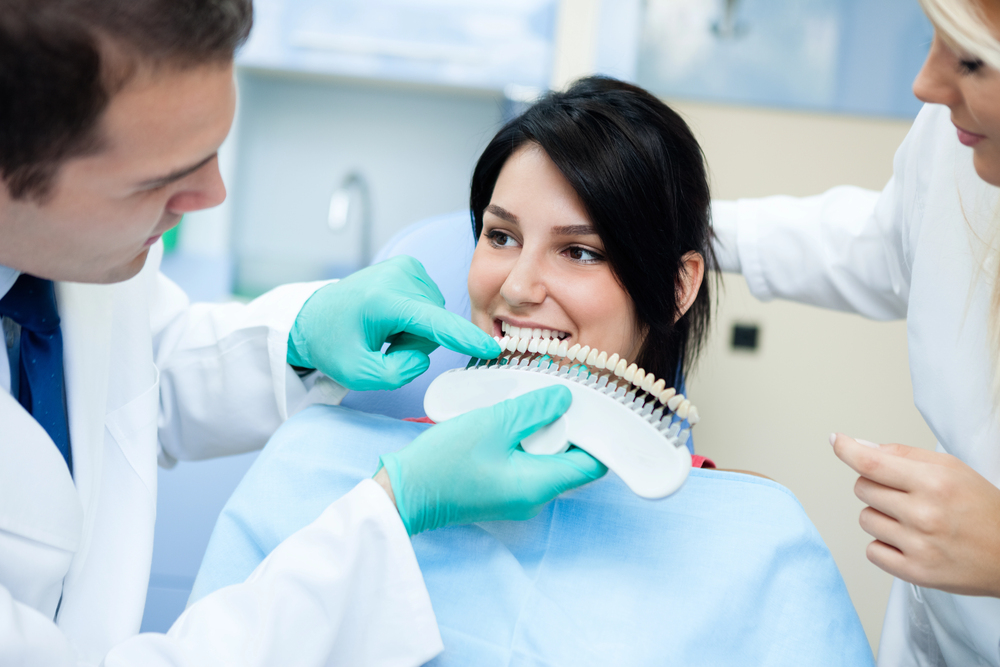
The landscape of oral healthcare is undergoing a radical transformation, moving far beyond the traditional “drill and fill” era. Today, the focus has shifted toward a sophisticated fusion of artistry and science, where the goal is no longer just health, but the pursuit of absolute aesthetic harmony. In Australia, this evolution is driven by patients who desire results that are not only immediate but also indistinguishable from nature. As we navigate through 2026, the integration of high-level computing and biological science is making the “perfect smile” more accessible, predictable, and comfortable than ever before.
Digital Smile Design and AI Integration
One of the most profound shifts in modern practice is the move toward total predictability. Historically, patients had to rely on a dentist’s verbal description or 2D sketches to imagine their post-treatment look. With Digital Smile Design (DSD), that uncertainty has vanished. By using high-resolution 3D intraoral scanners and advanced AI algorithms, clinicians can now create a “digital twin” of a patient’s mouth.
These AI systems analyze facial proportions, lip movement, and even the golden ratio of tooth dimensions to propose a smile that perfectly fits the individual’s unique facial architecture. Patients can view a 3D simulation of their future teeth on a screen and even test a physical “mock-up” in their mouth before a single tooth is touched. This collaborative process ensures that the final result is a bespoke creation rather than a one-size-fits-all solution.
The Rise of Minimally Invasive Veneers
The “Hollywood smile” of the past often required significant removal of healthy tooth enamel to accommodate thick porcelain shells. In 2026, the trend has swung toward preservation. Modern cosmetic dentistry now utilizes ultra-thin, “contact lens” veneers. These restorations are crafted from high-strength lithium disilicate or zirconia and can be as thin as 0.3mm.
Because these veneers are so remarkably slim, they often require little to no preparation of the natural tooth. This “no-prep” approach preserves the structural integrity of the enamel, reduces sensitivity, and allows for a completely reversible process in some cases. It is the ultimate way to enhance facial aesthetics using modern aesthetic dentistry while keeping the underlying biological foundation intact.
3D Printing and Same-Day Restorations
Convenience is a major driver of innovation in Australian dental clinics. The traditional workflow for crowns or veneers—involving messy putty impressions and a two-week wait for lab delivery—is becoming obsolete. In-office 3D printing and CAD/CAM (Computer-Aided Design and Manufacturing) milling machines have brought the dental laboratory directly to the chairside.
Clinicians can now design, manufacture, and bond a permanent porcelain restoration in a single appointment. These 3D-printed materials are not just fast; they are incredibly precise. The digital workflow eliminates the margin for human error inherent in manual casting, resulting in a fit that is accurate down to the micron. This efficiency allows busy professionals to achieve a complete smile makeover without the need for multiple days off or temporary teeth.
Laser Dentistry and Gum Contouring
A perfect smile is not just about the teeth; it is also about the “frame”—the gums. Laser technology has revolutionized how we manage the gingival architecture. In the past, correcting a “gummy smile” or uneven gum line required scalpels and sutures, leading to significant swelling and downtime.
Modern soft-tissue lasers can now reshape the gum line with pinpoint accuracy. The laser cauterizes the tissue as it cuts, meaning there is virtually no bleeding, minimal post-operative pain, and an incredibly fast healing response. Furthermore, lasers are being used for “biophotonic” teeth whitening, which uses specific wavelengths of light to activate whitening gels more deeply and quickly without the thermal sensitivity associated with older lamp-based systems.
Bioactive Materials and Long-Term Wellness
The future of cosmetic dentistry is also getting “smarter” at a molecular level. We are seeing the introduction of bioactive restorative materials that do more than just fill a gap. These materials can release essential minerals like calcium and phosphate, helping to remineralize the surrounding tooth structure and prevent secondary decay.
Furthermore, there is a growing emphasis on biocompatibility. High-tech clinics are moving away from traditional metals and towards ceramics and resins that mimic the light-reflecting properties of natural enamel while being completely inert within the body. This holistic approach ensures that the aesthetic improvements contribute to the patient’s overall systemic health.
As these technologies continue to converge, the boundary between what is natural and what is “dentistry” continues to blur. From AI-driven planning to the precision of robotic-assisted implant placement, it is clear that dental technology enhances oral care by prioritizing the patient experience and delivering results that last a lifetime.